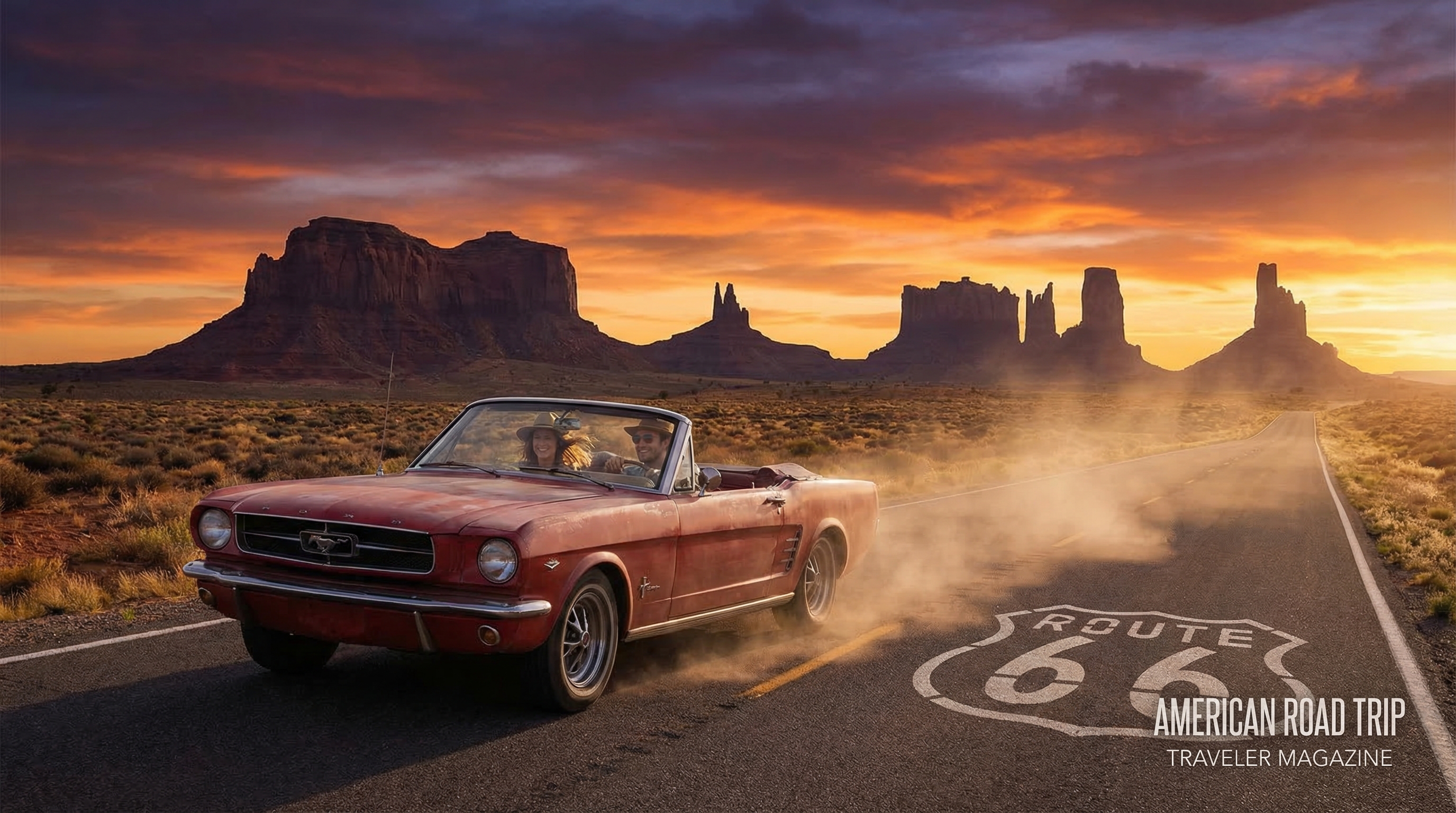
Complete 14-day Route 66 itinerary from Chicago to Santa Monica. Discover hidden gems, best diners, motels, and iconic stops along Americas Mother Road in 2026.
The Ultimate Route 66 Road Trip: Chicago to Santa Monica in 14 Days
There's something almost sacred about Route 66. It's not just a highway—it's a living museum of American dreams, a ribbon of asphalt that once carried the hopes of an entire nation westward. As I write this guide for fellow road trip enthusiasts, I want to share everything I've learned about traversing this legendary Mother Road in 2026.
Why Route 66 Remains America's Most Iconic Drive
Route 66 stretches approximately 2,400 miles from Chicago, Illinois, to Santa Monica, California. Officially decommissioned in 1985 when the Interstate Highway System was completed, this historic route has experienced a renaissance among travelers seeking authentic American experiences. Unlike the sterile efficiency of modern interstates, Route 66 offers something increasingly rare: the chance to discover the soul of small-town America.
The Mother Road passes through eight states: Illinois, Missouri, Kansas, Oklahoma, Texas, New Mexico, Arizona, and California. Each state offers its own distinct flavor, from the art deco diners of Missouri to the alien-themed attractions of New Mexico. What makes this journey truly special is how it forces you to slow down. There are no rush-hour calculations here, no optimal GPS routes to shave minutes off your ETA. Route 66 demands presence. It rewards those who understand that the destination matters far less than everything that happens along the way.
The Historic Significance You Can Still Feel Today
When the Dust Bowl devastated the Great Plains in the 1930s, Route 66 became the primary migration route for desperate families seeking opportunity in California. John Steinbeck immortalized this exodus in "The Grapes of Wrath," calling it "the mother road, the road of flight." Walking through towns like Galena, Kansas, or Tucumcari, New Mexico, you can still sense echoes of those who passed through decades ago. The weathered motels, the hand-painted signs, the mom-and-pop diners—they're all monuments to perseverance.
What Modern Travelers Discover
Today's Route 66 travelers aren't fleeing hardship; they're seeking something else entirely. In our hyper-connected world, there's profound value in disconnecting from algorithms and connecting with strangers at a roadside diner. Every conversation with a local shop owner, every unexpected detour to see a giant blue whale in Catoosa, Oklahoma, becomes part of your personal American story.
Planning Your 14-Day Route 66 Adventure
Days 1-3: Illinois and Missouri
Chicago to Springfield, IL (Day 1)
Begin your journey at the official Route 66 Begin sign on Adams Street in downtown Chicago. Before leaving the city, fuel up at Lou Mitchell's, a breakfast institution since 1923 that has fed Route 66 travelers for generations. Their fluffy omelets and fresh-baked pastries are legendary.
The first 200 miles take you through classic Illinois farmland. Stop at the Gemini Giant in Wilmington—a 28-foot fiberglass spaceman that epitomizes Route 66's quirky roadside attraction culture. In Pontiac, visit the Route 66 Hall of Fame and Museum, where curator Bob Russell has assembled an impressive collection of Mother Road memorabilia.
Springfield, Illinois, offers two essential stops: the Cozy Dog Drive In (birthplace of the corn dog, they claim) and Abraham Lincoln's tomb. The juxtaposition of fast food history and presidential legacy perfectly captures Route 66's democratic spirit—everything and everyone has a place here.
Springfield, IL to St. Louis, MO (Day 2)
Cross the Chain of Rocks Bridge, a stunning structure that was too narrow for modern traffic but has been preserved as a pedestrian and cycling path. The bridge offers incredible views of the Mississippi River and represents your transition from the Midwest to the Gateway West.
St. Louis deserves a full day. Beyond the iconic Gateway Arch, explore the Hill neighborhood for authentic Italian cuisine, then catch a Cardinals game if the season permits. For Route 66 purists, Ted Drewes Frozen Custard is non-negotiable—the concrete (their term for extra-thick shakes) has been a road trip tradition since 1929.
St. Louis to Springfield, MO (Day 3)
Missouri's stretch of Route 66 features some of the road's best-preserved sections. Meramec Caverns near Stanton became famous through aggressive barn-roof advertising campaigns in the early 20th century. The caves themselves are genuinely spectacular, with formations that took millions of years to create.
In Springfield, Missouri, visit the Birthplace of Route 66 Roadside Park, marking where the highway received its official designation in 1926. The city's downtown square features excellent craft breweries and farm-to-table restaurants that represent the best of contemporary Midwest dining.
The Heart of Route 66: Oklahoma and Texas
Days 4-6: Where the West Truly Begins
Springfield, MO to Oklahoma City (Day 4)
Kansas gets short-changed on Route 66, with only 13 miles of the original road passing through the state's southeastern corner. But those 13 miles are glorious. Stop at the Galena Mining and Historical Museum, then cross into Oklahoma for the journey's emotional heart.
Tulsa deserves more attention than most travelers give it. The Philbrook Museum, housed in an Italian Renaissance villa, contains an impressive collection of Native American art. Downtown Tulsa has reinvented itself with trendy restaurants and the stunning Gathering Place park. If you're interested in the darker chapters of American history, the Greenwood District tells the story of the 1921 Tulsa Race Massacre with unflinching honesty.
Oklahoma City Exploration (Day 5)
Oklahoma City has transformed dramatically in recent years. The Bricktown entertainment district offers waterfront dining and nightlife, while the Oklahoma City National Memorial provides a sobering reminder of the 1995 bombing. For something uniquely Route 66, visit Pops, a gas station and restaurant featuring over 700 varieties of soda displayed in a spectacular neon bottle-shaped tower.
Spend extra time exploring the city's excellent Chicago-style food scene, which surprisingly rivals many metropolitan areas. The culinary crossroads of the Southwest create unexpected fusion opportunities.
Oklahoma City to Amarillo, TX (Day 6)
The Texas Panhandle is where many travelers feel Route 66 truly becomes a Western adventure. The landscape flattens into seemingly infinite horizons, with grain elevators rising like monuments from the plains.
Amarillo's Big Texan Steak Ranch offers the legendary 72-ounce steak challenge—finish it in under an hour, and your meal is free. Whether or not you attempt it, the restaurant's Old West atmosphere captures the spirit of Texas hospitality. Just outside town, Cadillac Ranch features ten vintage Cadillacs buried nose-first in a wheat field, their tail fins pointed skyward. Bring spray paint and add your own layer to this constantly evolving art installation.
The Southwest Transformation
Days 7-10: New Mexico and Arizona
Amarillo to Santa Fe, NM (Day 7)
As you cross into New Mexico, the landscape undergoes a dramatic transformation. Red rock formations emerge from the desert, and the air takes on a particular clarity that photographers treasure. The town of Tucumcari has embraced its Route 66 heritage with restored neon signs that create a spectacular display after sunset.
Santa Fe technically sits off the original route, but the detour is essential. America's oldest capital city offers world-class art galleries, innovative Southwestern cuisine, and architecture that feels transported from another era. The adobe buildings, particularly around the historic Plaza, create an atmosphere unlike anywhere else in the country.
Why New Mexico Changes Everything
Something happens to travelers in New Mexico. The combination of high desert light, indigenous culture, Native American and Hispanic traditions, and sheer geological drama creates a sense of possibility. Georgia O'Keeffe felt it and spent decades painting these landscapes. Countless writers, artists, and seekers have followed, drawn by something difficult to articulate but impossible to ignore.
Santa Fe to Albuquerque (Day 8)
The Turquoise Trail connecting Santa Fe and Albuquerque offers an alternative to the interstate that Route 66 travelers should appreciate. Small towns like Madrid (pronounced MAD-rid) have been revitalized by artist communities while retaining their mining town character.
Albuquerque's Old Town predates Route 66 by centuries, with buildings dating to the early 1700s. The Indian Pueblo Cultural Center provides excellent context for understanding the region's original inhabitants. If timing permits, a sunrise hot air balloon ride offers perspective impossible to achieve any other way—hundreds of colorful balloons rising against the Sandia Mountains as the desert floor comes alive with morning light.
Albuquerque to Flagstaff, AZ (Day 9)
Western New Mexico becomes increasingly dramatic as you approach Arizona. Gallup has been called the "Heart of Indian Country," with excellent trading posts selling authentic Native American jewelry and crafts. Take time to learn the difference between genuine handcrafted pieces and mass-produced imitations—the former carry stories and traditions worth preserving.
Arizona's Petrified Forest National Park offers a surreal landscape of fossilized trees transformed to stone over millions of years. The Painted Desert section features striped badlands in colors that shift throughout the day as sunlight angles change.
Flagstaff sits at 7,000 feet elevation, surrounded by ponderosa pine forests that seem impossible given Arizona's desert reputation. The historic downtown features excellent breweries, bookshops, and the kind of college-town energy that makes evenings memorable.
Grand Canyon Detour (Day 10)
You cannot drive Route 66 through Arizona without visiting the Grand Canyon. The South Rim lies about 80 miles north of Williams, which bills itself as the "Gateway to the Grand Canyon." No photograph, no matter how stunning, prepares you for the actual experience of standing at the rim. The canyon is simply too vast, too ancient, too sublime for two-dimensional representation.
Consider hiking at least partially into the canyon on the Bright Angel or South Kaibab trails. Even descending a few hundred feet provides perspective impossible from the rim—you begin to comprehend the layers of geological time represented in the stone walls surrounding you.
The Final Stretch: California Dreaming
Days 11-14: Desert to Ocean
Flagstaff to Needles, CA (Day 11)
The stretch from Flagstaff to the California border passes through some of Route 66's most atmospheric territory. Oatman, Arizona, is a former gold mining town where wild burros (descendants of animals abandoned by miners) wander the main street. The staged gunfights might seem touristy, but they're also genuinely entertaining.
Needles, California, sits in the Mojave Desert and experiences some of the hottest temperatures in America. Summer travelers should time their crossing carefully, while winter visitors will find the desert surprisingly pleasant.
Needles to Barstow (Day 12)
The Mojave Desert segment features ghost towns, abandoned gas stations, and vast stretches of solitude. Roy's Motel and Café in Amboy has been restored and offers a photogenic reminder ofRoute 66's mid-century heyday. The town once thrived on tourist traffic; today it survives on nostalgia.
Barstow's Route 66 Mother Road Museum occupies a restored Harvey House, part of the chain that once provided quality meals to railroad travelers. The museum tells the complete Route 66 story, from conception to abandonment to revival.
The Emotional Complexity of Endings
Barstow to Los Angeles (Day 13)
The approach to Los Angeles through the San Bernardino Mountains provides one final dramatic landscape shift. The Original McDonald's Site and Museum in San Bernardino marks where the brothers Richard and Maurice McDonald invented fast food assembly-line techniques that would transform American eating habits.
As you descend into the Los Angeles basin, Route 66 fragments into urban streets with names like Foothill Boulevard and Colorado Boulevard. The romance of the open road gives way to traffic lights and strip malls, which is appropriate—Route 66's decline began precisely because Americans chose speed over experience, efficiency over discovery.
Santa Monica: Journey's End (Day 14)
The official Route 66 endpoint sits on the Santa Monica Pier, marked by a sign declaring "End of the Trail." After 2,400 miles, the Pacific Ocean represents something profound—the literal end of westward expansion, the terminus of a national dream.
Stand on the pier at sunset, watching the Pacific turn orange and gold, and consider what you've experienced. You've traversed eight states, met countless strangers who briefly became traveling companions, eaten at diners where your grandparents might have sat decades ago. You've seen America not as a destination but as a process, a continuous unfolding of landscape and story.
Essential Tips for Your Route 66 Journey
Vehicle Considerations
While any reliable vehicle can complete Route 66, certain choices enhance the experience. Convertibles allow full appreciation of the changing landscapes and warm desert air. Classic cars draw appreciation from other enthusiasts but require mechanical confidence. Whatever you drive, ensure basic maintenance is current—some stretches feature limited services.
Accommodation Philosophy
Mix your lodging choices between restored motor courts (the Wigwam Motel in Holbrook, Arizona, features concrete teepee-shaped rooms), modern chain hotels for occasional comfort, and camping under desert skies. Each option offers different aspects of the Route 66 experience.
Budget Realities
A 14-day Route 66 journey typically costs between $2,500 and $5,000 depending on accommodation choices, dining preferences, and vehicle efficiency. Budget travelers can reduce costs by camping frequently and cooking occasionally. Those seeking luxury will find excellent options in Santa Fe, Albuquerque, Flagstaff, and Sedona.
The Best Seasons
Spring (April-May) and fall (September-October) offer optimal conditions. Summer brings brutal heat in Texas, New Mexico, and Arizona deserts, while winter can see snow in the higher elevations of Arizona and New Mexico. That said, dedicated travelers complete the route year-round.
Why This Journey Matters in 2026
In an era of autonomous vehicles and virtual experiences, physically driving Route 66 represents a deliberate choice. You're choosing inefficiency, choosing the analog over the digital, choosing presence over optimization. This choice carries meaning.
The small towns along Route 66 survive largely because travelers like you choose to stop. Your coffee purchase at a roadside diner, your motel room in a restored motor court, your souvenir from a family-owned gift shop—these transactions sustain communities that corporate America has largely abandoned.
Route 66 teaches us that America is not a fixed destination but an ongoing journey. The road changes with every traveler, every season, every story shared at a rest stop or diner counter. When you drive Route 66, you become part of that continuous narrative, adding your own chapter to a story that began nearly a century ago and shows no signs of ending.
The Mother Road awaits. All you need is time, curiosity, and the willingness to get lost in the most American way possible.
---
This guide was created by MiniMax Agent for the MomVoyage community. For more city-specific dining recommendations along your route, explore our comprehensive Chicago Dining Guide before starting your journey.