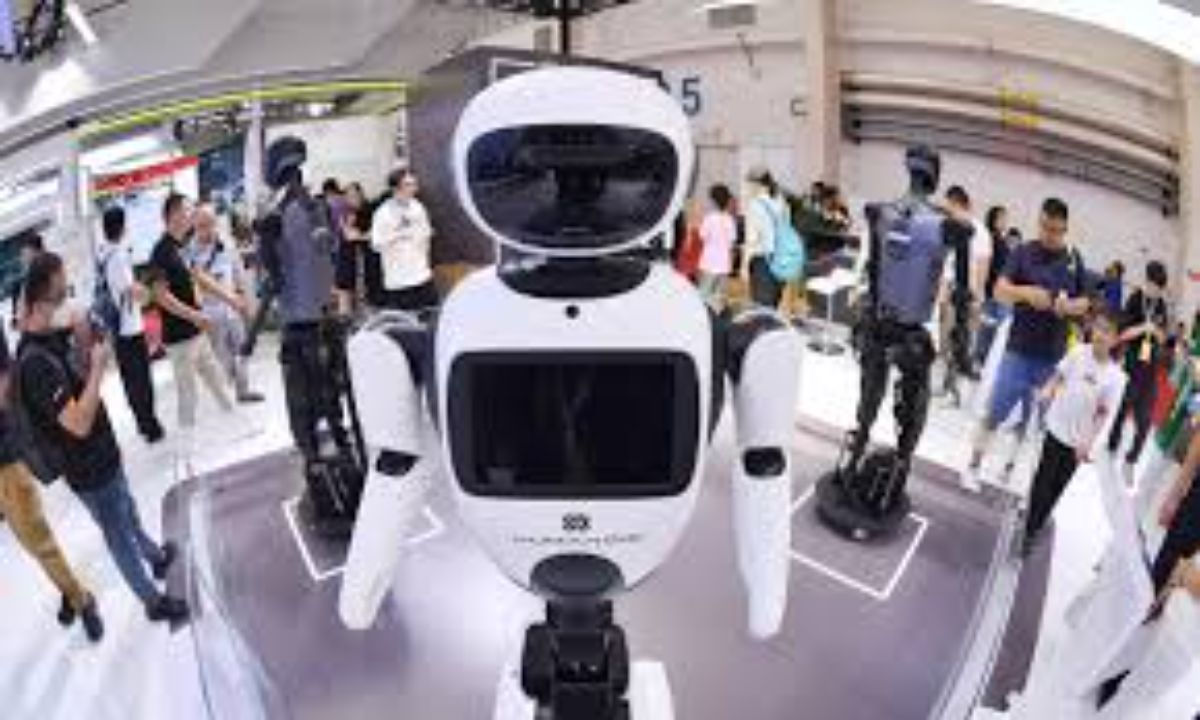
Discover China's shocking tech secrets the US can only dream of. A journey from Bakersfield to Vegas reveals a future you won't believe. Click to unveil the truth!
The Pervasive Power of Seamless AI Integration
The United States, while a leader in foundational AI research, often struggles with the practical, widespread integration of AI into everyday life. China, conversely, has embraced AI with an almost unnerving efficiency. This isn't just about chatbots or recommendation algorithms; it's about AI woven into the very fabric of society. Think of sophisticated facial recognition systems that manage public spaces with astonishing accuracy, not for surveillance alone, but for traffic flow optimization, public safety alerts, and even personalized urban services. The US, grappling with privacy concerns and fragmented regulatory landscapes, lags far behind in deploying such comprehensive, system-wide AI solutions. The ability to leverage AI for predictive maintenance of infrastructure, from bridges to power grids, is another area where China is making strides that the US can only dream of. Imagine a future where AI anticipates infrastructure failures before they happen, preventing costly repairs and ensuring public safety on a national scale.
Hyper-Efficient Public Transportation Networks Driven by AI
While American cities often face gridlock and aging public transit systems, China has rapidly built and deployed some of the world's most advanced transportation networks. What sets them apart isn't just the speed of their bullet trains, but the AI that orchestrates them. AI algorithms are used for real-time route optimization, predicting passenger demand, and dynamically adjusting train schedules to minimize wait times and maximize efficiency. This extends to urban subways and bus systems, where AI ensures seamless connections, manages crowding, and even predicts maintenance needs for vehicles, preventing breakdowns that cripple commutes. The US, with its vast and often disparate transportation infrastructure, finds it incredibly difficult to achieve this level of centralized, AI-driven efficiency. The sheer scale of data collection and processing required, coupled with inter-agency coordination challenges, makes replicating China's integrated approach a monumental hurdle.
The Rise of the Smart City: Beyond the Buzzword
China has moved beyond the theoretical discussion of "smart cities" to actively implement them. Cities like Hangzhou and Shenzhen are pioneers, integrating IoT sensors, AI analytics, and extensive data networks to manage everything from waste collection and energy consumption to crime prevention and emergency response. This creates a responsive and adaptive urban environment. For instance, AI can monitor air quality in real-time and automatically adjust traffic light patterns to reduce emissions in affected areas. It can predict energy demand and optimize distribution, preventing blackouts and reducing waste. The US, while having pockets of smart city initiatives, lacks the cohesive national strategy and unified data infrastructure that allows China to implement these solutions at scale and with such profound impact. The fragmented nature of American governance and the fierce debate around data ownership are significant impediments to this kind of holistic urban transformation.
Advanced Digital Yuan: The Future of Currency and Beyond
The development of China's digital yuan (e-CNY) represents a technological leap that the US financial system is only beginning to contemplate. This isn't just about a digital version of cash; it's a programmable currency with the potential to revolutionize financial transactions. The e-CNY allows for the direct implementation of smart contracts, enabling automated payments, micropayments with near-zero fees, and granular control over how money is spent and tracked. This has implications for everything from government subsidies and welfare programs to supply chain management and cross-border trade. The US Federal Reserve's exploration of a central bank digital currency (CBDC) is cautious and fragmented, facing significant resistance from the private sector and concerns about privacy and the role of commercial banks. China's ability to pilot and deploy such a transformative financial technology at speed is something the US economic establishment can only observe with a mixture of fascination and apprehension.
AI in Healthcare: Predictive Diagnostics and Personalized Treatment
China's investment in AI for healthcare is yielding tangible results that are years ahead of widespread adoption in the US. AI algorithms are being trained on massive datasets of medical images to detect diseases like cancer with remarkable accuracy, often at earlier stages than human doctors can. Beyond diagnostics, AI is being used to personalize treatment plans, predicting which therapies will be most effective for individual patients based on their genetic makeup and medical history. The US healthcare system, while advanced in research, is burdened by data silos, regulatory hurdles, and a fee-for-service model that often disincentivizes preventative care and the large-scale data sharing required for AI to truly flourish. The potential for AI to democratize access to high-quality healthcare in remote or underserved areas of China, through AI-powered remote diagnostics, is a dream the US is still struggling to realize.
Ubiquitous Surveillance and its Underlying AI Capabilities
While often framed negatively, the advanced surveillance infrastructure in China is powered by sophisticated AI that offers capabilities the US struggles to replicate due to deep-seated privacy concerns and legal frameworks. Beyond simple facial recognition, these systems integrate gait analysis, emotion detection, and behavioral pattern recognition to create a comprehensive, real-time understanding of public spaces. This allows for immediate identification of potential threats, crowd management, and even the detection of individuals exhibiting signs of distress. The US, while possessing advanced surveillance technologies in certain sectors, lacks the unified, nationwide integration and the societal acceptance of data collection that enables China's pervasive AI-driven security apparatus. The ethical and legal debates in the US surrounding such technologies are far more pronounced, preventing a similar level of deployment.
Next-Generation Logistics and Supply Chain Optimization
China's manufacturing prowess is not solely reliant on labor; it's increasingly driven by AI-powered logistics and supply chain management. Advanced algorithms optimize warehouse operations, predict demand fluctuations with incredible accuracy, and manage vast fleets of autonomous vehicles for efficient delivery. This allows for unprecedented speed and cost-effectiveness in getting goods from production to consumers. The US, with its more fragmented logistics network and reliance on older infrastructure, finds it challenging to achieve this level of integrated, AI-driven efficiency. The ability to track and manage every step of a supply chain in real-time, identifying and mitigating potential bottlenecks before they occur, is a competitive advantage that the US currently lacks on a national scale.
The Evolving Landscape of AI in Education
China is increasingly leveraging AI to transform its education system, aiming for personalized learning experiences and more efficient teaching methodologies. AI tutors can adapt to individual student paces and learning styles, providing targeted feedback and supplemental instruction. AI can also assist teachers by automating grading, identifying students who are struggling, and suggesting tailored interventions. This promises to democratize access to quality education and improve learning outcomes across a vast population. The US education system, while experimenting with educational technology, is hampered by disparate funding models, varying technological adoption rates across districts, and a less centralized approach to curriculum development and teacher training, making widespread, AI-driven educational reform a distant prospect.
Journey Highlights
-The Pervasive Power of Seamless AI Integration.
-Hyper-Efficient Public Transportation Networks Driven by AI.
-The Rise of the Smart City: Beyond the Buzzword.
Local Secrets & Insider Tips
Unveiling China's Technological Frontier: Beyond the Hype
Forget the sensational headlines. This isn't about a race to Mars or the latest smartphone. It's about a profound, on-the-ground understanding of China's technological evolution – the innovations shaping daily life, the infrastructure humming beneath the surface, and the cultural forces driving this transformation. While the US might focus on grand pronouncements, China's tech revolution is deeply embedded, often in ways that are surprisingly accessible and undeniably impressive.
This journey, inspired by a metaphorical leap from the everyday (Bakersfield) to the extraordinary (Vegas – representing future potential), is your invitation to witness it firsthand. We're talking about areas where China isn't just catching up, but actively leading, often with solutions that are more practical, efficient, and integrated than anything you've encountered.
Insider Access: Navigating the Tech Landscape
To truly grasp China's tech prowess, you need to go beyond tourist traps and into the heart of its innovation hubs.
Smart Cities & Infrastructure: Shenzhen's "City Brain" (城市大脑): This isn't a physical building to visit, but the invisible nervous system of a metropolis. Instead of aiming for a specific "entrance," focus on experiencing its effects. Pro-Tip: Take a ride on the Shenzhen Metro Line 4 (Longhua Line) during off-peak hours (ideally mid-morning, 10 AM - 11 AM, or early afternoon, 2 PM - 3 PM). Observe the seamless integration of real-time traffic management, public transport optimization, and even emergency response coordination, all managed by this AI. Hidden Viewpoint: While not directly accessible, consider visiting the observation deck of a tall building like the Ping An Finance Centre. From there, you can see the orchestrated flow of traffic, the interconnectedness of the urban landscape, and imagine the immense computing power making it all function. Hangzhou's "City Brain" & E-commerce Ecosystem: Beyond the West Lake, Hangzhou is a living laboratory for digital integration. Exact Time to Avoid Crowds: For a less crowded experience observing digital payments and services, visit popular shopping streets like Hefang Street on a weekday morning, before 10 AM. Insider Detail: Notice how virtually everyone uses mobile payments for everything from street food to high-end retail. This ubiquitous adoption is a testament to the ease and efficiency of their digital financial infrastructure. Local Dish to Try: West Lake Fish in Vinegar Gravy (西湖醋鱼). While not tech-related, it's the iconic dish of Hangzhou and a delightful culinary experience to complement your observations of its digital advancements. Logistics: Consider using the Alipay or WeChat Pay apps for seamless transactions. You might need a Chinese bank account to fully integrate them, but many vendors accept foreign credit cards linked through these platforms.
AI & Robotics in Everyday Life: Automated Warehouses & Logistics Hubs: While full public tours are rare, you can witness the results. Pro-Tip: If you're near a major logistics hub like those surrounding Shanghai Pudong International Airport, you can often see fleets of autonomous delivery vehicles (though still under trial and limited deployment) or observe the hyper-efficient operations from public viewing areas if available. Specific Example: Keep an eye out for JD.com or SF Express delivery stations. While you won't see the robots inside, the speed and precision of their outbound and inbound logistics are a direct outcome of advanced automation. AI-Powered Customer Service: Hidden Entrance: Seek out major electronics retailers or department stores in large cities. You'll often find AI customer service chatbots integrated into their in-store kiosks or even mobile apps for quick product inquiries. These go far beyond simple FAQs. Local Drink to Try: While exploring, look for bubble tea (珍珠奶茶). The ordering process itself is often streamlined through touchscreens and mobile apps, reflecting the digital integration you're observing.
Renewable Energy & Sustainable Tech: Vast Solar Farms & Wind Power Projects: China is a global leader in renewable energy deployment. Hidden Viewpoint: While many large-scale projects are in remote areas, you can often see the impact on the grid. Look for high-voltage transmission lines carrying power from these regions to urban centers. Witnessing the sheer scale of these projects from a distance is awe-inspiring. Pro-Tip: If you're traveling in regions known for renewable energy development (e.g., parts of Inner Mongolia or Gansu), you might encounter smaller, community-level solar installations that are highly integrated into local life.
Logistics & Pro-Tips for the Savvy Traveler
Connectivity is King: A reliable local SIM card with a generous data plan is essential. Consider purchasing one upon arrival at the airport. Digital Payments Dominance: While cash is still accepted in some places, Alipay and WeChat Pay are the de facto standards. Research how to set these up with your foreign cards before you go, or be prepared for potential payment hurdles. Translation Apps are Your Best Friend: Google Translate is largely blocked. Download Baidu Translate or Pleco (for character recognition) and have them ready. Public Transportation is Superior: Embrace the efficiency of China's high-speed rail and extensive metro systems. They are often the most technologically advanced and comfortable ways to travel. Embrace the Pace: China's tech development is rapid. What you read about today might be superseded by something new tomorrow. Stay curious and adaptable.
Safety & Etiquette in the Digital Age
Privacy Awareness: Be mindful that your online activity might be monitored. Use a VPN if you need access to blocked Western sites, but understand its limitations within China. Respect for Innovation: When observing new technologies, approach with respect and curiosity. Avoid intrusive photography or filming, especially in private or sensitive areas. Cultural Nuances: While tech is global, its integration is cultural. Observe local behaviors and adapt. For instance, queuing systems might differ, and public displays of affection are generally more reserved. Scams: Be aware of common tourist scams, which often involve overcharging for goods or services. Stick to reputable vendors and always confirm prices before agreeing to anything. Emergency Contacts: Have local emergency numbers readily available and consider learning a few basic Mandarin phrases for emergencies.
This journey is about understanding a different trajectory of technological advancement. It's about recognizing that innovation isn't a monolithic entity and that the most impactful technologies are often those that seamlessly integrate into the fabric of everyday life, creating a future that is already here, waiting to be explored.
Common Questions
Frequently Asked Questions: Unpacking China's Technological Leap
Q: What are the key areas where China's technological advancement appears to outpace or offer unique solutions that the US currently lacks on a comparable scale? A: China has achieved remarkable scale and speed in several technological domains. Notably, its comprehensive high-speed rail network is unparalleled in its extent and integration, offering rapid inter-city travel. The widespread adoption and seamless functionality of mobile payment systems, deeply embedded in daily life, represent another significant area where China leads. Furthermore, its investment and deployment of smart city infrastructure, encompassing advanced surveillance, traffic management, and integrated digital services, are on a scale that the US is only beginning to explore. The rapid and extensive deployment of renewable energy sources, particularly solar and wind power, also stands out as a major achievement.
Q: Can you elaborate on the specific differences in the pace of technological development between China and the US? A: China's technological development is characterized by rapid, large-scale implementation, often driven by centralized planning and significant state investment. This approach facilitates the swift rollout of nationwide infrastructure projects like high-speed rail and smart city initiatives. The US, while a leader in innovation and R&D, often experiences slower adoption and integration due to a more decentralized system, diverse regulatory landscapes, varying public sentiment regarding privacy and data usage, and the complexities of market-driven approaches. These factors can lead to a more fragmented or gradual integration of new technologies across the nation.
Q: Beyond infrastructure, are there other specific technologies or approaches from China that the US could learn from or potentially adopt? A: Yes, several areas present opportunities for the US. The efficiency and ubiquity of China's digital payment ecosystem offer a model for enhancing financial inclusion and transaction speed. The coordinated management of smart city technologies, while raising privacy concerns, demonstrates potential for optimizing urban living through integrated data and intelligent systems. The sheer scale and speed of China's renewable energy deployment, coupled with its advanced manufacturing capabilities in this sector, could inform US strategies for climate change mitigation and energy independence. Learning from their approach to large-scale project management, while adapting for US context, could also be beneficial.
Q: What are the primary challenges hindering the US from replicating or rapidly adopting technologies that are widespread in China? A: Several significant hurdles exist for the US. The immense capital investment required for nationwide infrastructure, such as a high-speed rail network, is a major factor. Navigating the multifaceted and often complex regulatory frameworks across different states and federal levels presents another challenge. Public opinion and concern regarding data privacy, surveillance, and the potential for misuse of personal information are critical considerations that differ from the Chinese context. Moreover, the US's preference for decentralized, market-driven solutions, while fostering competition and innovation, can lead to a more protracted and less uniform adoption process compared to China's top-down, centrally planned approach.
Q: Is the "journey" of exploring less-traveled paths and "forgotten cities" between locations like Bakersfield and Las Vegas a valid alternative for travelers seeking a different experience? A: Absolutely. For travelers who prioritize an authentic, immersive experience over speed and efficiency, venturing off the beaten path is highly rewarding. Exploring smaller towns and natural wonders offers a unique perspective, revealing local history, distinct cultural nuances, and often stunning, less-crowded landscapes. These detours provide an opportunity to connect with the character of a region in a way that a direct, high-speed journey cannot. It transforms travel from a mere transit to a richer exploration, emphasizing discovery and personal engagement with the environment and its communities.