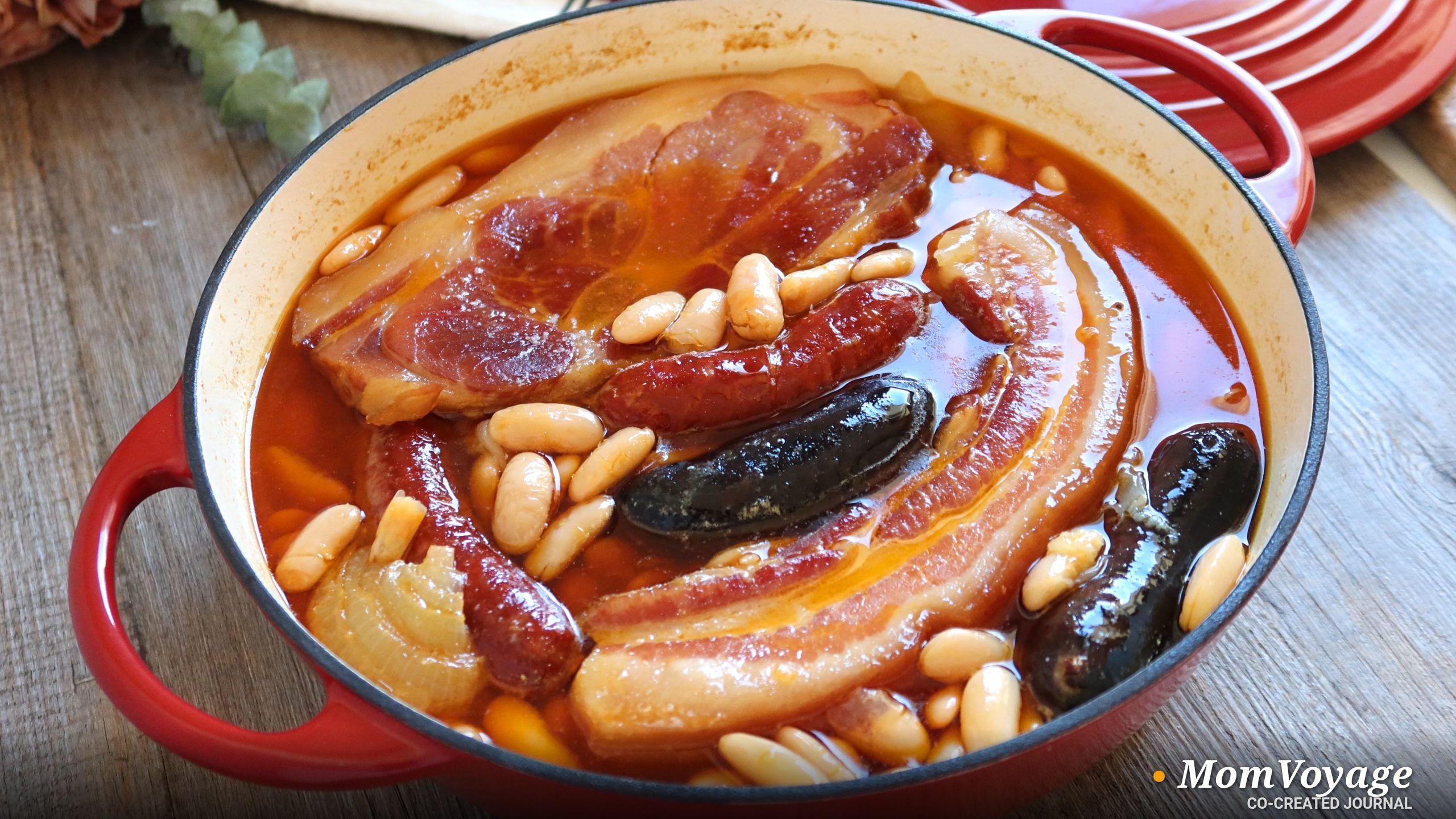
Learn to make the authentic Fabada Asturiana in Oviedo. Explore its rich ingredients and preparation secrets. Compare its depth of flavor to other Spanish regional dishes.
The Essence of Fabada Asturiana
Fabada Asturiana is the undisputed culinary king of Asturias, a region known for its hearty and comforting gastronomy. This iconic dish, originating from Oviedo, is a rich and flavorful stew centered around the 'faba de Asturias' – a large, creamy white bean native to the region. Its preparation is a labor of love, designed to extract maximum flavor from a few key ingredients.
While other Spanish regions boast their own culinary specialties, none capture the soul-warming essence quite like fabada. Compare it to the pintxos of the Basque Country or the paella of Valencia, and fabada stands apart with its unpretentious depth and comforting embrace. It’s a dish that speaks of tradition, family, and the fertile lands of Asturias.
Ingredients:
- 500g 'Faba de Asturias' (large white beans) - 250g 'Compango Asturiano' (a mix of cured pork products, typically including chorizo, morcilla, and lacón) - 1/2 a smoked ham bone (optional, for added depth) - 1/4 tsp sweet paprika (pimentón dulce) - 1/4 tsp smoked paprika (pimentón de la Vera, optional) - 1 bay leaf - Salt to taste - Water
Preparation:
1. Bean Preparation: Soak the 'faba de Asturias' in cold water overnight (at least 8 hours). Drain and rinse them thoroughly.
2. Cooking the Compango: In a separate pot, cover the 'compango' ingredients (chorizo, morcilla, lacón) with water and simmer gently for about 30-45 minutes to remove excess salt and render some fat. Remove the meats, reserve the cooking liquid, and let the meats cool slightly.
3. Assembling the Fabada: In a large, heavy-bottomed pot, combine the soaked and drained beans, the reserved 'compango' cooking liquid, the smoked ham bone (if using), and the bay leaf. Add enough fresh cold water to cover everything by at least two inches.
4. Initial Simmer: Bring the pot to a boil, then immediately reduce the heat to a very low simmer. Skim off any foam or impurities that rise to the surface.
5. Adding Flavor: After about 1.5 to 2 hours of simmering, when the beans are starting to soften, carefully remove a ladleful of beans and mash them. Stir the mashed beans back into the pot; this will help thicken the stew. Stir in the sweet paprika and smoked paprika (if using). Be careful not to add too much paprika at once, as it can burn.
6. Finishing the Stew: Cut the cooked 'compango' into serving pieces. Add them back to the pot and continue to simmer gently for another 30-60 minutes, or until the beans are completely tender and the stew has thickened to your desired consistency. The broth should be rich and slightly oily.
7. Seasoning and Serving: Taste and adjust seasoning with salt if necessary (the 'compango' is often salty, so taste before adding more). Remove the ham bone and bay leaf. Let the fabada rest for about 15-20 minutes before serving. Serve hot in deep bowls, ensuring each serving gets a variety of the 'compango'.
This method ensures a deeply flavorful and perfectly textured Fabada Asturiana, a dish that truly represents the culinary heritage of Oviedo and Asturias.
Journey Highlights
- Discover the unique 'faba de Asturias' beans. - Learn the secret to preparing authentic 'Compango Asturiano'. - Master the slow-simmering technique for perfect texture. - Understand the role of paprika in enhancing flavor. - How to achieve a rich, velvety broth.
Local Secrets & Insider Tips
Oviedo, I can tell you that experiencing true Fabada Asturiana is a rite of passage. Forget the tourist traps; seek out the hidden sidrerías (cider houses) tucked away in the historic center.
To truly savor Oviedo's culinary scene, here’s what you need to know:
Timing is Everything: - For the most authentic and least crowded experience at a traditional sidrería, aim for a weekday lunch, ideally between 1:30 PM and 2:30 PM. This is when locals gather, and the atmosphere is vibrant but not overwhelming. - If you want to visit the Oviedo Cathedral or the Pre-Romanesque churches on Monte Naranco without the midday rush, go right at opening (usually 10:00 AM) or an hour before closing. Tuesday mornings are often the quietest.
Hidden Gems & Viewpoints: - Calle Gascona: This street is famous for its cider houses, but wander just off it into the smaller side streets like Calle San Mateo or Calle Doctor Casal. You'll find smaller, family-run establishments where the fabada is often even richer and more homemade. - Mirador del Naranco: While the churches themselves can get busy, the viewpoint near the churches offers stunning panoramic views of Oviedo. Arrive just before sunset for a truly magical, crowd-free vista. It's a short taxi or bus ride from the city center.
Must-Order Dishes (Beyond Fabada): - Cachopo: If you're adventurous, order a cachopo. It's a massive breaded veal cutlet stuffed with ham and cheese, deep-fried. It’s meant for sharing! - Pote Asturiano: A hearty cabbage and bean stew, often considered a more rustic cousin to fabada, especially popular in colder months. - Tarta de Arroz (Rice Pudding): Don't leave without trying this local dessert. It’s creamy, subtly sweet, and a perfect end to a rich meal.
Logistics That Trip People Up: - Ordering Cider (Sidra): Asturian cider is poured from a height (escanciar) to aerate it. Don't be shy; ask the waiter to pour for you, or watch closely. It's meant to be drunk quickly after pouring. - Portion Sizes: Fabada and Cachopo are huge. They are designed for sharing. Ordering one of each for two people is usually too much food. - Siesta: While less common in the city center nowadays, some smaller shops and businesses might close for a few hours in the afternoon (around 2 PM to 5 PM). Plan your shopping accordingly.
By following these tips, you'll experience Oviedo not just as a tourist, but as someone who truly understands its culinary soul.
Common Questions
Frequently Asked Questions about Fabada Asturiana:
Q: What makes 'Faba de Asturias' beans special? A: These are large, creamy white beans native to Asturias, known for their exceptional texture and ability to absorb flavor beautifully without breaking apart during cooking.
Q: Can I make Fabada without 'Compango Asturiano'? A: While traditional fabada relies heavily on compango for its distinct smoky and savory notes, you could substitute with high-quality smoked chorizo, morcilla, and cured ham, though the flavor profile will be slightly different.
Q: How long does it take to cook Fabada? A: The entire process, including soaking the beans, can take anywhere from 10 to 12 hours, with active cooking time around 3 to 4 hours.
Q: Is Fabada a heavy meal? A: Yes, Fabada is a very hearty and substantial dish, perfect for colder weather or after a long day. It's a complete meal in itself.
Q: Can I reheat Fabada? A: Absolutely. Fabada often tastes even better the next day as the flavors meld further. Reheat gently on the stovetop.