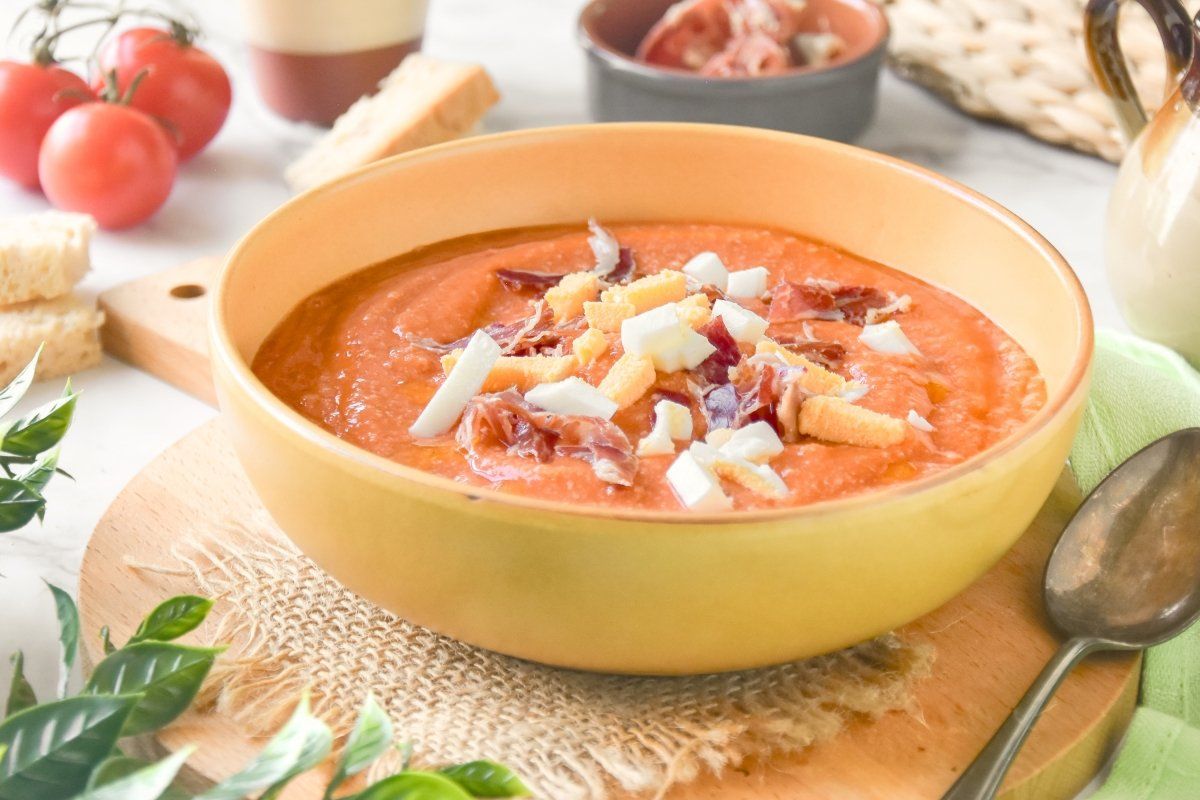
Sevilla's most famous local recipe is shrouded in mystery. Uncover the shocking truth and learn to cook it yourself. Don't miss this secret!
The Soul of Sevilla: Unlocking the Secrets of a Classic Recipe
Sevilla, a city that pulses with passion and flavor, is home to a culinary masterpiece that captures its essence: the Salmorejo Cordobés. While technically originating from Córdoba, this cold tomato soup has become a beloved staple in Sevillian kitchens and tapas bars, often enjoyed as a lighter, refreshing alternative to heartier dishes, especially during the warm Andalusian months.
The Heart of Salmorejo: Ingredients
Authentic Salmorejo relies on the simplest, highest-quality ingredients. The magic lies in their perfect balance and the freshness of each component.
- Tomatoes: Ripe, flavorful tomatoes are the non-negotiable base. Varieties like 'Rama' or 'Perita' (Pear) work best due to their meaty texture and rich taste. You'll need about 1kg (2.2 lbs). - Bread: A day-old, crusty white bread is crucial for thickening. Avoid soft, supermarket white bread. 'Pan de telera' or 'pan de campo' are ideal. Approximately 150-200g (5-7 oz). - Garlic: A clove or two, depending on your preference. Remove the germ to avoid a harsh bite. - Extra Virgin Olive Oil: A generous amount of good quality Spanish olive oil (around 100-150ml or 3.5-5 fl oz) is key for creaminess and flavor. - Salt: To taste. - Sherry Vinegar (optional but recommended): A small splash (1-2 tbsp) adds a subtle tang that elevates the flavors.
Garnishes (Essential for the Experience):
No Salmorejo is complete without its traditional toppings, which add texture and contrasting flavors.
- Jamón Ibérico: Finely diced, high-quality cured Spanish ham. - Hard-Boiled Eggs: Finely chopped.
The Art of Preparation: Step-by-Step
Making Salmorejo is surprisingly simple, but requires attention to detail.
1. Prepare the Tomatoes: Wash the tomatoes thoroughly. Roughly chop them and place them in a blender or food processor. Blend until completely smooth. Pass the tomato puree through a fine-mesh sieve to remove skins and seeds, ensuring a silky texture. Discard the solids. 2. Soak the Bread: Tear the bread into small pieces and soak it in a little water for a few minutes until softened. Squeeze out any excess water. 3. Combine and Blend: Add the soaked bread, garlic clove(s), salt, and optional sherry vinegar to the sieved tomato puree. Blend everything together until you achieve a thick, smooth paste. You may need to do this in batches depending on your blender's capacity. 4. Emulsify with Olive Oil: With the blender running on a low speed, slowly drizzle in the extra virgin olive oil. Continue blending until the oil is fully incorporated and the Salmorejo becomes thick and creamy, resembling a rich mayonnaise. 5. Chill: Transfer the Salmorejo to an airtight container and refrigerate for at least 2 hours, or preferably overnight. This allows the flavors to meld and the soup to thicken further. 6. Serve: Ladle the chilled Salmorejo into individual bowls. Garnish generously with finely diced Jamón Ibérico and chopped hard-boiled eggs. Serve immediately.
Journey Highlights
- The essential ingredients for authentic Salmorejo: ripe tomatoes, day-old bread, garlic, extra virgin olive oil, salt, and optional sherry vinegar. - Traditional garnishes include finely diced Jamón Ibérico and chopped hard-boiled eggs. - Step-by-step instructions: blending tomatoes, adding bread and seasonings, emulsifying with olive oil, chilling, and garnishing. - Salmorejo is a refreshing cold tomato soup, perfect for warm Andalusian weather.
Local Secrets & Insider Tips
As a Sevillano who's seen more summers than I care to count, I can tell you that truly experiencing our city means understanding its rhythm, especially when it comes to food and beating the heat.
Navigating the Culinary Scene Like a Local:
For the most authentic Salmorejo, bypass the heavily touristed spots in the Santa Cruz barrio, especially around the Cathedral. Instead, head towards the Alameda de Hércules or the Triana market (Mercado de Triana). Look for small, unassuming bars packed with locals.
- Best Time for Salmorejo: While available year-round, it's sublime from late spring through early autumn. Enjoy it for a light lunch or a pre-dinner tapa. - Hidden Gem Restaurants: Try Bodeguita Romero for incredible pringá montaditos and excellent Salmorejo. Another favorite is Casa Morales, an old wine cellar with a fantastic atmosphere and traditional dishes. - Avoid Tourist Traps: If a place has menus in five languages and touts aggressively outside, keep walking. Look for handwritten menus and a lively buzz from Spanish conversations inside.
Logistics and Crowd Avoidance:
Sevilla gets incredibly hot, and crowds can be intense, especially during Semana Santa (Holy Week) and Feria de Abril. Plan accordingly.
- Alcázar of Seville: If you must visit, book your tickets online, weeks in advance. Aim for the earliest possible entry, 9:30 AM, right when it opens. Go straight to the Palace of Don Pedro first before the main rush. The gardens are best explored after 11 AM when the morning heat has somewhat subsided, but be aware it will be crowded. - Plaza de España: Visit at sunrise (around 7:00 AM in summer) for the magical light and to have the place almost to yourself. The crowds descend by 9:00 AM. - Cathedral & Giralda: Again, the first slot at 9:45 AM (check opening times seasonally) is your best bet. Buy tickets online. If climbing the Giralda, take your time; it's a ramp, not stairs, so pace yourself and enjoy the views from different levels. - Hidden Viewpoints: For a unique view of the Giralda without the crowds, find a rooftop bar. EME Catedral Hotel's rooftop offers stunning, albeit pricier, vistas. For a more local feel, explore the rooftops in the Triana district. - Getting Around: The city center is very walkable. For longer distances, use ride-sharing apps or taxis. Avoid driving in the center; parking is a nightmare. The tram is useful for specific routes connecting Plaza Nueva to San Bernardo. - Siesta Culture: Embrace it! Many smaller shops close between 2:00 PM and 5:00 PM. Plan your shopping or errands around this. Restaurants will often stay open, but the pace slows considerably.
Common Questions
Frequently Asked Questions About Salmorejo:
Q: Is Salmorejo the same as Gazpacho? A: No, while both are cold Spanish soups, Salmorejo is thicker, creamier, and less liquid due to the higher ratio of bread and emulsified olive oil. It's often considered a starter or a main dish, whereas Gazpacho is typically a lighter soup.
Q: Can I make Salmorejo without a blender? A: It would be extremely difficult to achieve the smooth, emulsified texture without a powerful blender or food processor. Traditional methods involved a mortar and pestle, but this is very labor-intensive.
Q: How long does Salmorejo last in the refrigerator? A: Properly stored in an airtight container, Salmorejo can last for 3-4 days. The flavor often improves on the second day.
Q: What kind of bread is best for Salmorejo? A: A day-old, crusty white bread with a good crumb, like a rustic loaf or 'pan de pueblo', works best. Avoid soft sandwich bread as it can make the soup gummy.